Thursday, July 18, 2013

Guy-Write by Ralph Fletcher

176 Pages
ISBN-10: 0805094040
What a fun read! I'd recommend this to all K-8 teachers. I'd also recommend this to parents desiring to inspire their particularly writing-resistant sons. Ralph Fletcher writes Guy-Write with the hope of inspiring young boys to pursue writing even if they have not exactly received support for their very boyish interests such as slapstick humor, gore, or the classic boy pastime, the fart.

The book is written in a friendly and fun-loving tone and Fletcher calls upon his own experiences of hesitating to write when he was young. Additionally, he raised two boys and shares many anecdotes about the crazy (and often unpopular school topics) they enjoyed writing about. Each chapter includes illustrations from kids, entertaining examples in different genres, and little Post It® type notes as reminders about how to succeed in each genre.

For those instructors who teach writing in a "writers" workshop format, perhaps similar to those spearheaded by Lucy Calkins and her work with The Teachers College at Columbia University, you will be pleased to see a section on keeping a "writer's notebook" and the different ways to use it as a source for capturing ideas and practicing the craft of writing. He also includes a section about drawing before writing as a way to get and organize ideas, an idea embraced by many teachers who try to get reluctant writers going.

The whole idea behind the book is to get boys writing. Plain and simple. While he acknowledges that there may be few opportunities to write a serious essay on flatulence, he also argues (and I completely agree) that boys need to have "permission" to write about the things that interest them so they can master the craft of writing. Let's be honest. Few people get excited about subordinate clauses, except we odd lovers of language who adore the subordinate clause, so why not get kids writing about topics that get their juices flowing and becoming the writers we know they can be?


Thursday, June 21, 2012

 I recently finished After Annie by Michael Tucker. The novel centers on the intersection of two people: Herb Aaron and the beautiful bartender, Olive. The two are at polar opposites. Herb is decades removed from his success as an actor, such that when people recognize him he is merely "that guy who played on that show." Olive is a young actress who needs Herb to be there for her in order to make in the business. Problem is Herb is exhausted, cantankerous, and in mourning over the loss of his wife and lover, Annie. One evening, while Annie is fading away, Herb tells her about meeting Olive and Annie insists that she meet her. The two connect deeply and when Annie passes Herb becomes Olive's surrogate mentor. Annie serves as the tether that holds Olive and Herb together even though Herb does his best to escape. He soon learns that his final memory and connection to Annie is in Olive. Often funny, sometimes bizarre, Tucker creates a fun story in which two characters learn there is so much more to life after Annie.

Thursday, April 12, 2012

Calico Joe by John Grisham

The game of baseball has its traditions. Yankee Pinstripes. The Green Monster. The Babe. All conjure images of a game that is as much part of our collective culture as the American Dream. Perhaps that is why baseball is so much a part of our heritage of hope. So many children grow up and see themselves one day playing the game like the pros. Baseball has its vernacular like so many American institutions do. The fastball. The full count. The moon shot. The three bagger. Nicknames run rampant as well. The film The Sandlot captured the heroic nature of the nickname when the boys thought of the Babe Ruth: The Sultan of Swat, The Great Bambino, The Colossus of Clout.

One such player, Joe Castle, added to the nostalgia of baseball by having arguably the greatest rookie start in the history of the game and showed unparalleled promise. Joe Castle emerged as a Chicago Cub in the summer of 1973 and immediately captured the attention of everyone. In just 38 games he hit an astonishing .488, including 21 home runs. He captured most rookie records and had the entire baseball country following him like a road map. Then, with one pitch high and inside, he was knocked out of the game forever.

John Grisham retells this story as a work of fiction from the point of view of the son of the pitcher for the New York Mets who hit Calico Joe. Joe's nickname came from his hometown of Calico Rock, Arkansas, a place that took him back in after his injury and protected him from the media that was so intent on chronicling his fall from potential baseball immortality. The novel explores the troubled relationship of a young boy, Paul Tracey, and his father, Warren Tracey, who the child initially idolized and eventually despised because he knew the truth that he was a womanizer and drunk who hit Calico Joe with the intent of knocking him out of the game perhaps out of jealousy. As his father's health begins to fail, Paul tries to get his father to accept one of the many mistakes he made in his life and apologize to Calico Joe before he loses the opportunity. This is a short novel, quickly read in one day if one so wishes. This is the first Grisham novel I read and plan to get to know his work better.

Sunday, January 15, 2012

NOW READING: Mover over Melville, make room for Moby Duck.
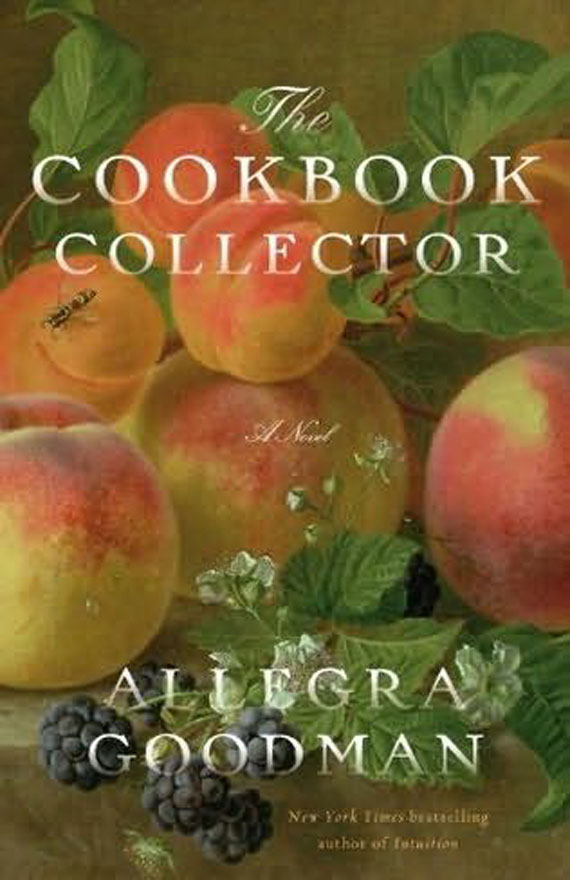
An interesting book about sisters. It also about collecting things: money, objects, ideas, lovers, lessons...Allegra Goiodman's novel is set during the explosion of dot com start companies that took the stock market by storm and made millionaires out of brilliant programming kids. Juxtaposed with the young energetic generation, is an older wiser one that warns the youth about their wild extragavance. Like most young people, experience is the best teacher. And experience can never be predicted. Nor could the effect of learning the true identity of a mother who passed away early in the lives of two young girls, nor could the love affair between distant generations, nor the day two airplanes crashed into two towers.

Goodman shows us that in collecting things, the objects themselves lose their luster once they are possessed. Once the luster has vanished, we either become content with what we have, yearn for something more, or understand that one will always lead to the other, and, that with this knowledge comes a possession that no one can ever take away: wisdom to recognize the difference.

Sunday, December 18, 2011

Don't Expect Magic

This young adult novel by Kathy McCullough will appeal to many audiences, but I'd say it is a story that many high school aged girls would enjoy as a Christmas gift. Delaney is a young girl from New Jersey, whose mother has recently died, and is shipped out to the west coast to live with a father she barely knows. As she struggles to get to know her father, fit in with a new town and school where everything seems bright and bubbly, dark and dreary Delaney struggles to find her way.
The interesting thing that brings Delaney and her father together is a secret that he has. While he is known as Dr. Hank, the renowned self-help author, Delaney discovers that his gifts really come from an unusual secret: he's a fairy god father. This comedic element directs the story away from Delaney's depression toward her inner search to see if she has inherited her father's gift.
The best aspect of this book is the unique "fairy" angle. McCullough does a great job creating an interesting tension between the reader's expectations of a fairy godmother and the rough and rugged Delaney who is as far away from pumpkins, balls, and glass slippers you could ever find. Her signature clothing is her boots which she designs herself. Equipped with skulls, flames, and blood, her boots garner lots of attention and a weary attitude toward her. Her progress in breaking down this rough wall of separation is an interesting part of the plot's development.
A light, clever story that will appeal to many.

Saturday, November 26, 2011

Battle Hymn of the Tiger Mother


Well, I'm back to my blog with a book recommended by a colleague at a dinner. How we got on the topic of Chinese mothers is beyond me since it was an educational association gathering, but perhaps it had something to do with teaching and discipline. That's what Amy Chua writes in her memoir about raising two daughters in the "Chinese way" (This phrase appears throughout the book).

She comes from a background of hardworking immigrants who taught her self-discipline through highly anti-western methods (another term Amy uses often is "westerners" which basically means Americans). She claims that traditional Chinese parents ignore a child's self-esteem when it comes to feedback about performance and encouragement when it comes to achievements.

Amy describes how she tries to raise her children in New Haven the Chinese way to be successful students and musicians. She describes in the great detail the numerous hours she spent hovering over her children like a taskmaster never withholding a critical remark and avoiding platitudes so as to discourage complacency. The chapters are all very short and this helps to cover many years of childhood well without getting too bogged down in family history. Some of my favorite chapters have to do with Amy and her youngest daughter railing at each other one moment and then cuddling in the next. The amazing thing to witness is how this intimacy slowly breaks down over the years and how Amy doesn't see it because her Chinese mothering blinds her to it.

This book is for men and women alike, in my opinion. I have learned that there is a fine line between encouragement and coercion and that one can motivate and even criticize in healthy ways. She is both inspiring as a parent and humorous as a writer. There is not a tough moment that she deals with that cannot be saved with a little comic relief. Anyone who raises kids should read this book (and then take a vacation from their kids for a few days lest they be tempted to be a tiger mother without much training).